Discovery of tsRNAs in mature sperm

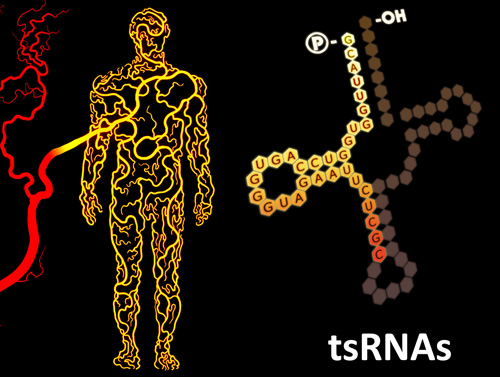
In year 2012, by analyzing mature sperm small RNAs by RNA-seq in mice, we serendipitously found that the mature sperm contain a unique subset of tRNA–derived small RNAs (tsRNAs), mainly from 5′ transfer RNA halves and ranging in size from 29-34 nucleotides. tsRNAs show a drastic increase at late- spermatogenesis and post- spermatogenesis during epididymis maturation, suggesting regulated tRNA cleavage or/and selective concentrating mechanisms at these stages. tsRNAs are enriched in the sperm head and thus could be delivered into oocytes during fertilization. Like tRNAs, tsRNAs are highly conserved, leading us to propose that tsRNAs might serve as an ancient paternal element with evolutionarily conserved functions. (Cell Res 2012; Highlighted in Cell Res 2013)

Hidden information carriers in sperm: tRNA-derived small RNA (tsRNA) & rRNA-derived small RNA (rsRNA)

Discovery of tsRNAs in serum, across vertebrate species
After identifying tsRNAs as a new type of sperm small RNAs, we further discovered that tsRNAs are also abundantly and conservatively present in the serum of a wide range of vertebrates (from fish to human), and that serum tsRNAs are sensitive to pathological conditions (e.g. active infection) in mice, monkey and human beings. Importantly, we found that tsRNAs extracted from serum are more stable than chemically synthetic tsRNAs of the same sequence, suggesting RNA modifications in tsRNAs would contribute to their stabilization in the serum, thus represent another layer of information. (J Mol Cell Biol 2014)

Sperm tsRNAs/rsRNAs, and RNA modifications, contribute to epigenetic inheritance of paternally acquired traits

Parallel with the discovery of tsRNAs in sperm and serum, we are fascinated by the increasing evidence that certain acquired traits during paternal exposure can be “memorized” in the sperm and inherited by the offspring, reviving the ideas of 'Lamarckian inheritance' and 'Darwin's Pangenesis' (Nat Rev Genet 2016Nat Rev Mol Cell Biol 2018). We found changes in sperm tsRNAs level and modifications in mice with a paternal high-fat diet (HFD) (Science 2016), and later on also found another type of small RNAs, rRNA-derived small RNAs (rsRNAs), co-exist with tsRNAs in the sperm, both are sensitive to  HFD (Nat Cell Biol 2018). Zygote injection experiments revealed that the 30-40nt sperm RNA fraction (enriched in tsRNAs/rsRNAs) carries epigenetic information necessary to transmit metabolic disorders to the next generation (Science 2016; Nat Cell Biol 2018). We identified the RNA methyltransferase Dnmt2 as a crucial regulator. It shapes the sperm RNA ‘coding signature’ by influencing RNA modifications, biogenesis, and secondary structure (Nat Cell Biol 2018).

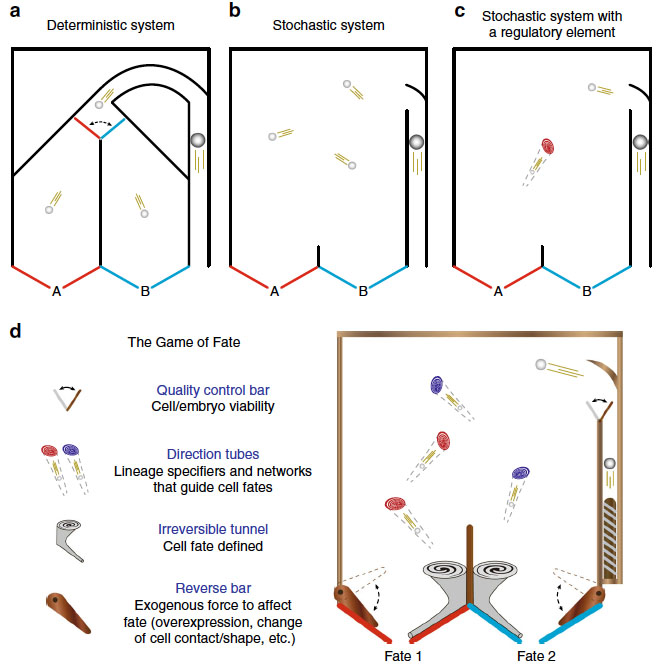
Mammalian pre-implantation embryos provide a unique opportunity to study how a single cell diverges into different fates. As illustrated in the "Game of Fate," this process is governed by a delicate interplay of deterministic and stochastic factors (Nat Commun 2018). Our earlier work revealed that the very first symmetry-breaking event involves chance separation alongside defined transcriptional circuits (Development 2015). These observations suggest a scenario of how order is created from a seemingly random process through the differential triggering of existing master regulators by the emergence of their small bias, such as demonstrated in the heterogeneous LincGET expression that bias later cell fate (Cell 2018).

 Bridging randomness and determinism

Origins of multicellularity and self-organization

The game of fate: deterministic & stochastic factors

How do these initial micro-asymmetries scale up into a highly ordered multicellular organism? Building upon these foundations, we recently proposed the "Asymmetric Initiation Hypothesis" (Nat Biotechnol 2026), posit that early intracellular asymmetries—ignited by physical constraints like spatial crowding or mechanical tension—serve as the initial spark for multicellular coordination.
PANDORA-seq (right optic) reads more hidden
'RNA code' than traditional RNA-seq (let optic)
 Inspired by the movie: National Treasure

Early embryo symmetry-breaking and self-organization

 Decode the 'RNA code' with advanced tools to promote precision medicine

Exploring the expanding world of small non-coding RNAs with new tools

We have also developed an LC-MS/MS based high-throughput platform that can simultaneously detect and quantify multiple types of RNA modifications in one RNA sample, initially used to study sperm RNA modifications (Science 2016, Nat Cell Biol 2018), and now being harnessed in other systems including for Alzheimer's disease (Neurobiol Dis 2020). Through collaboration with Dr. Shenglong Zhang lab, we  developed a mass spectrometry-based direct RNA sequencing method, MLC-Seq (JACS 2024) to unravel RNA sequence and site-specific RNA modifications maps simultaneously, with broad utility ahead.
To decode the RNA code and explore the expanding universe of small RNAs (Nat Cell Biol 2022), we developed a series of small RNA analyzing software SPORTS (GPB 2018), FUSION (Bioinformatics 2025) & qMAP (Mol Syst Biol 2026 with Tong Zhou lab to facilitate the annotation and analyses of tsRNAs and rsRNAs for precision medicine; a new sequencing method PANDORA-seq to overcome RNA modifications that prevent small RNA detection in traditional RNA-seq (Nat Cell Biol 2021), which uncovers a new and surprising small RNA landscape that is in fact, dominated by tsRNA/rsRNA, rather than miRNA in many tissues/cells. Interestingly, PANDORA-seq reveals that the tsRNA/rsRNA signature in the sperm heads are distinct from the whole sperm, suggesting compartmentalized signal and potentially distinct function in the nuclei (Nat Cell Biol 2021).

Beyond RNAi: aptamer-like function of small RNAs

Our PANDORA-seq (Nat Cell Biol 2021) has unveiled a vastly expanded universe of small non-coding RNAs (sncRNAs) that extends far beyond the well-known miRNAs, discoveries showing that newly identified sncRNAs like tsRNAs and rsRNAs, along with their RNA modifications, regulate various cell functions and serve as carriers for epigenetic memory across generations. These tsRNAs and rsRNAs carry various RNA modifications, which can now be identified and mapped at nucleotide resolution with newly developed MLC-seq (JACS 2024). The RNA modifications are integral to the small RNA functionality and contribute to features beyond linear complementarity in a RNAi-like fashion, and to the 3D structures of these small RNAs, enable them to function in what we call an aptamer-like fashion (JBC 2023, Mol Cell 2023).
Illustration of various modified small RNAs (unique aptamer-like Keys) surrounding a lock  (symbolizing Toll-like receptor 7/8)

Small RNA structure and modification in cell function

We posit that the yet-to-be-explored 3D structural features of these sncRNAs could be as crucial as their RNAi-based roles, such as by adopting aptamer-like roles in interacting with TLR7/8 to shape immune responses and autoimmune diseases (Trends Biochem Sci 2025). The evidence awaits discovery.

Based on the information capacity of sperm RNAs, we proposed the 'Sperm RNA Code' (Nat Rev Endocrinol 2019, 2020). This code comprises a combinatorial signature of various RNA species and their specific modifications, acting as an epigenetic carrier that senses paternal environmental conditions and programs offspring phenotypes. Our lab investigates how this Sperm RNA code interfaces with embryonic reprogramming to shape development and its potential as a tool for precision medicine. As a proof of concept, we recently deciphered the 'Sperm RNA Code of Aging': revealing a conserved progressive rsRNA length shift in both mice and humans, and an 'aging cliff' at mid-life (EMBO J 2026).  

Beyond RNA sequences and modifications, we are exploring RNA structures & biomolecular condensates as novel epigenetic information carriers in epigenetic inheritance and diseases (Nat Cell Biol 2025).
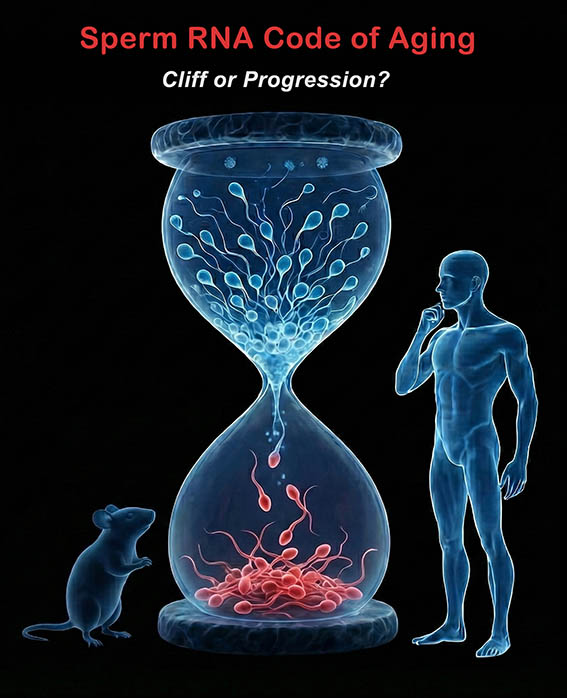
The Sperm RNA Code: From Epigenetic Inheritance to Aging
Beyond stochastic gene expression noise and uneven random segregation at cell division, we propose that cell-to-cell heterogeneity can also be initiated by pre-existing molecular inhomogeneity regulated by intracellular compartmentalization. We propose how morphological constraints and compartmentalized intracellular reactions serve as alternative sources of heterogeneity, biasing cell fate through altered local biochemical reaction spaces (Nat Commun 2018).
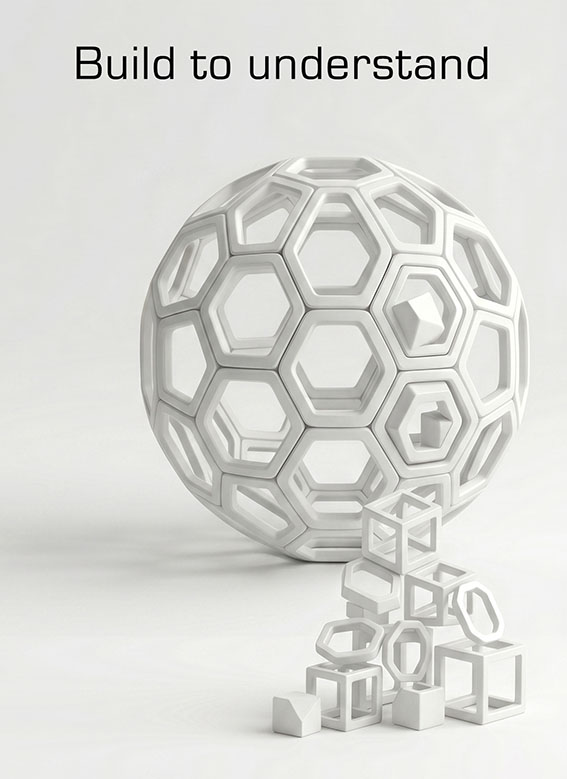
Once initiated, cells navigate physical laws (cavitation, folding, and branching) and continuous gene-mechanics feedback loops to self-organize into complex structures (Nat Biotechnol 2026). By transitioning from purely observing natural embryos to leveraging stem cell-derived embryo models, we collaborate with Magdalena Zernicka-Goetz lab to embrace a new paradigm: Build to understand. Reconstructing these morphogenetic processes in vitro allows us to experimentally decode the fundamental physical and molecular rules of life's emergence.